

The Rise of Prediction Markets: An Alternative to Sports Betting
I've watched the hype around prediction markets grow. Where I used to simply bet on an NFL game winner on FanDuel, I can now trade contracts on who will win MVP on platforms like Kalshi. These markets aren't gambling on a final score. They're collective intelligence engines that demonstrate the power of crowd wisdom for stock market prediction and various other forecasting challenges. The same principles that sharpen election forecasts can be applied to financial analysis, blending insights from many traders into a single, often remarkably accurate, consensus view on future events.
The shift feels fundamental. Instead of beating a sportsbook's vig, you're competing against the wisdom of the crowd. This model flips traditional betting on its head. My money is now directly pricing real-world event likelihood, not just backing an outcome.
How Prediction Markets Work: From Prices to Probabilities
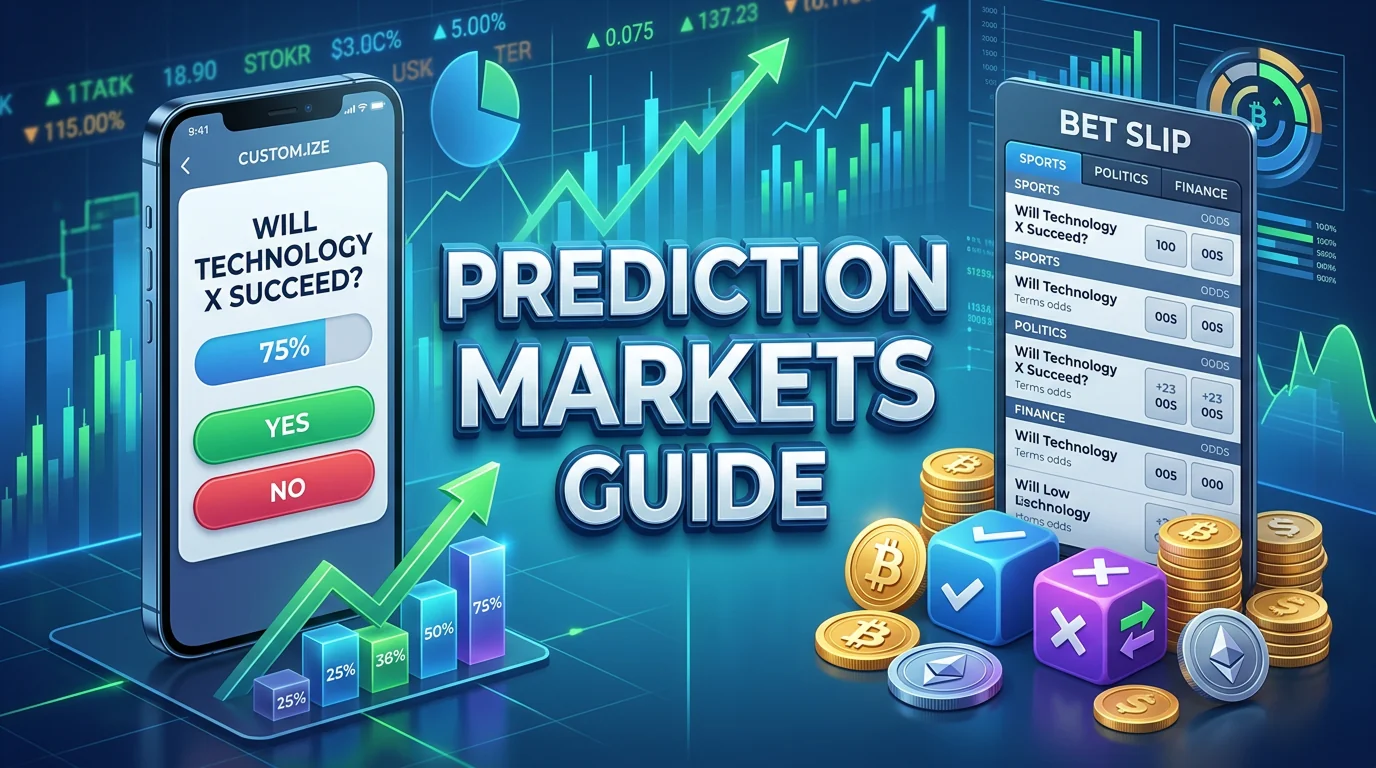
I've spent hours trading on Polymarket. It functions on a few core mechanics:
- You buy "Yes" shares if you believe an event will occur.
- You buy "No" shares if you believe it won't.
- The market price, say $0.70, directly implies a 70% probability.
- Your profit is the difference between your buy and sell price.
- You can cash out your position at any time before resolution.
This isn't abstract. When I bought "Yes" on a political outcome at $0.45, I was betting the true odds were better than 45%. The platform's liquidity pool ensures trades settle instantly. Your stake becomes a live forecast that others can bet against.
Prediction Exchanges vs. Traditional Sportsbooks: A Side-by-Side Comparison
The experience is fundamentally different. I've used DraftKings for traditional bets and Kalshi for market-style contracts.
| Platform | Core Model | Price Example | My Verdict |
|---|---|---|---|
| DraftKings Sportsbook | Fixed odds from the house | -110 (Bet $110 to win $100) | Simple, but you're always beating the vig. |
| Kalshi | Exchange-traded event contracts | Contract trades from $0.01 to $0.99 | Pure probability trading, superior for complex forecasts. |
| Betfair Exchange | Peer-to-peer betting exchange | Dynamic odds set by users | Closest to a true market, popular in the UK. |
The key distinction is who you're betting against. Exchanges often feature significantly lower fees than traditional books. I find markets more engaging for long-term political or economic events.

Key Features of Modern Prediction Sites and Platforms
After testing platforms like Polymarket and PredictIt, I've isolated the features that matter. Real-time order books, low minimum stakes (often $1), and clear resolution criteria are non-negotiable. Mobile access is crucial for live markets.
The best prediction platform feels less like a casino and more like a trading terminal for world events.
User interface is everything. A clunky site kills the experience. I prioritize platforms with deep liquidity pools to ensure my orders fill instantly. The ability to set limit orders, not just market orders, is a game-changer for serious forecasters.
Live Betting and In-Play Forecasting Dynamics
In-play markets on BetMGM move at a blistering pace. I've watched an NFL team's Super Bowl winner probability swing from 12% to 35% after a single touchdown drive. This isn't passive gambling.
It's reactive forecasting under intense pressure. You're synthesizing live game data, injury reports, and momentum shifts in seconds. The most profitable in-play bettors I know treat it like day trading, with strict stop-losses. The volatility is immense, but so is the potential for those who can read the flow.
Sports Finance: The Economic Impact of Betting Activities
The money flow is staggering and touches more than casinos. Here's the real economic footprint:
- Media rights deals for leagues are inflated by betting interest.
- States collect millions in tax revenue; New York took over $700 million in 2023.
- An entire analytics industry has emerged to service professional bettors.
- Sponsorship patches now appear on team jerseys, like BetMGM on the MLS.
- Platforms like ESPN Bet create new advertising and affiliate revenue streams.
This isn't just lost wagers. It's a full financial ecosystem. The direct tax revenue alone funds state programs, from education to infrastructure. I've seen local businesses near stadiums boom from pre-game traffic fueled by betting promos.
Advanced Forecasting: Analyzing Winning Predictions and Market Signals
Consistent winning requires moving beyond gut feelings. I track key data points in a disciplined spreadsheet.
| Signal Type | Example Metric | Target Threshold | My Tool |
|---|---|---|---|
| Line Movement | Point spread shift | Move of >2 points | Action Network |
| Market Sentiment | % of money vs. % of bets | Divergence >15% | Pregame.com |
| Sharps Indicator | Identified sharp action | Confirmed on 3+ books | DonBest |
| Public Overreaction | Odds swing post-injury | Overcorrection >5% | Custom alerts |
The goal is finding mismatches between price and probability. When sharp money and public sentiment diverge sharply, that's my strongest signal. I ignore 90% of the noise and act only on these high-conviction edges.
The Future of Gambling: From Raffles to Sophisticated Markets
I've seen the arc from church raffle tickets to trading derivatives on global events. The trajectory is clear. We're moving toward a world where any future outcome can have a financial instrument attached.
The next wave is blockchain-based, peer-to-peer markets with near-zero fees. Imagine betting on climate policies or tech adoption with the same ease as an NFL point spread. The line between investing, speculating, and gambling will completely blur. Regulation will struggle to keep pace with this decentralized, global model.
FAQ
Are prediction markets just another form of sports betting?
No, the model is fundamentally different. You're trading contracts based on collective probability, not just betting against a sportsbook's fixed odds. Your profit comes from accurate price forecasting, not just a binary win/loss.
Which platform is best for a beginner?
I'd start with Kalshi. Its interface clearly displays probability prices and has a low minimum stake. It feels more like a learning tool than a pure gambling site, which is ideal for new forecasters.
How do live betting dynamics differ from pre-game markets?
In-play odds swing violently with each play, like day-trading stocks. It requires rapid synthesis of live data. Successful bettors use strict stop-losses and react to momentum, not just pre-game analysis.
Can you really make money with advanced forecasting?
Yes, but it requires disciplined data tracking. I focus on divergences between sharp money and public sentiment. Acting only on these high-conviction signals, not every game, is the key to consistent edges.
What's the biggest economic impact of modern betting?
Direct state tax revenue is massive. New York collected over $700 million in a single year. This funds public programs and creates a full financial ecosystem beyond just the wagers themselves.
Will prediction exchanges replace traditional sportsbooks?
Not entirely, but they will capture significant market share. Exceptions appeal to those wanting to trade probabilities. Traditional books will remain for simple, casual bets where users prefer fixed odds.